Butterfly Gardens
The first one we visited was in 2006 outside Butchart Gardens in British Columbia.
The second was last year at Tropical World in Leeds, 12 miles from home.
The third occurred this past Thursday at the Tropical Butterfly House in Sheffield about 20 miles away.
Interestingly, the World Wide Web shows that there are 11 butterfly emporiums in England, while in northwest America two are listed: in Seattle and in Idaho. Again, I am impressed by the size of the English nation on its relatively small island compared to the world’s fourth largest country, the USA. Yet, in spite of its smallness, England boasts far more wildlife refuges and historic homes-evolved-into-tourist attractions.
Many such adapted homes also house collections of creatures ranging from kangaroos to pygmy goats and from ravens to armadillos.
In fact, the complete name of our Thursday destination is Tropical Butterfly House Wildlife Conservation Park. The photos show the variety of wildlife that we witnessed.
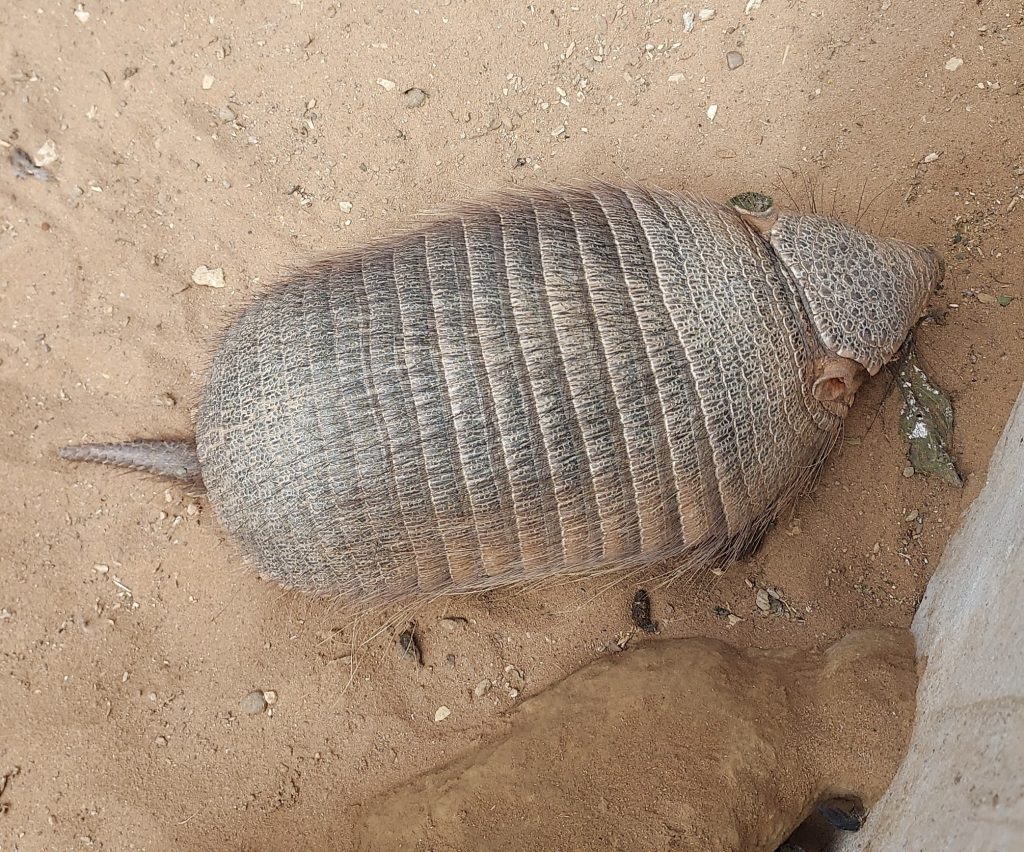
This baby armadillo moves easily, showing off its soft, pliable plates unlike its older relatives with hard, nearly immovable plates. This physical characteristic dates back to the dinosaurs.
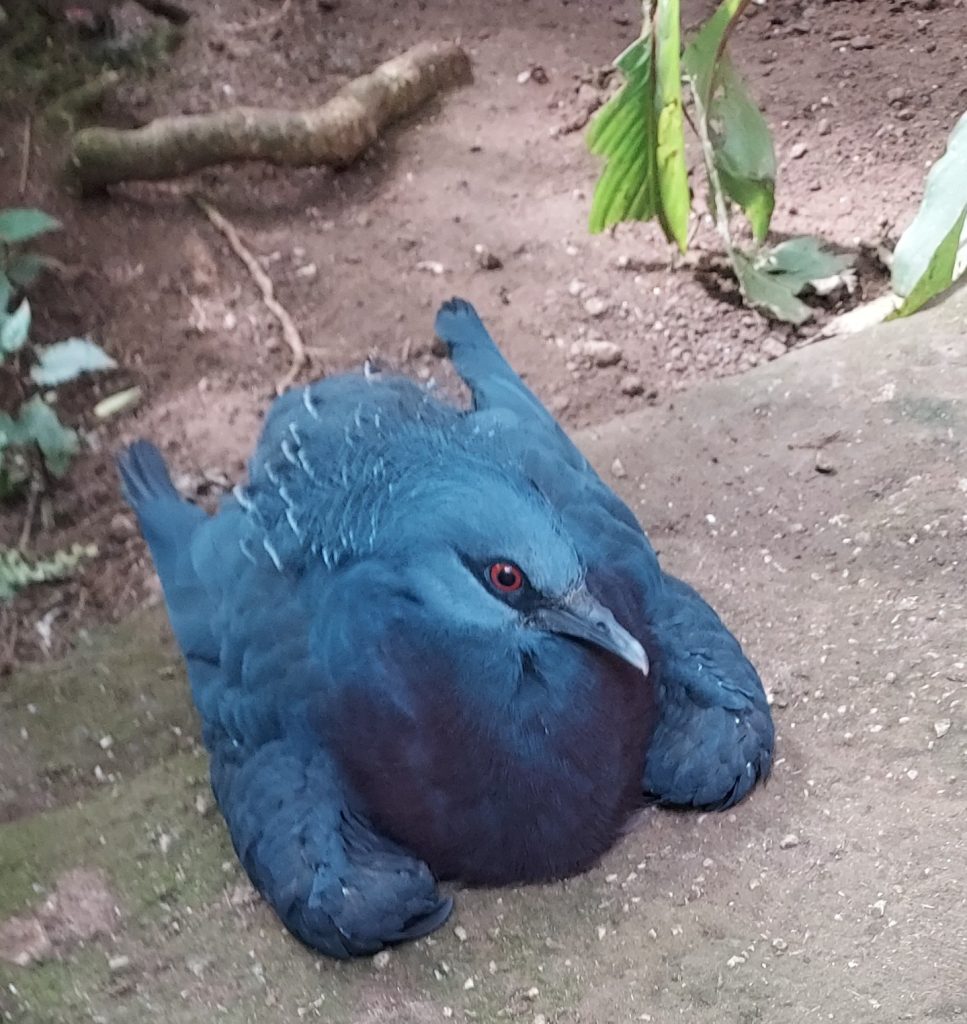
Kept in the bird house, not far from the Butterfly House proper, is the Victoria Crowned Pigeon. Boasting beautiful blue plumage, it originates in New Guinea rainforests.
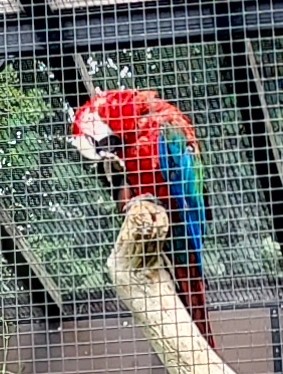
I called it a parrot. Rick called it a macaw. Actually, both designations are correct–to a point. This brilliantly colored fowl is a macaw from the family of New World Parrots, originating in Central and South America.
It and its two companions were housed in their own outside enclosure, a distance from the Butterfly House.
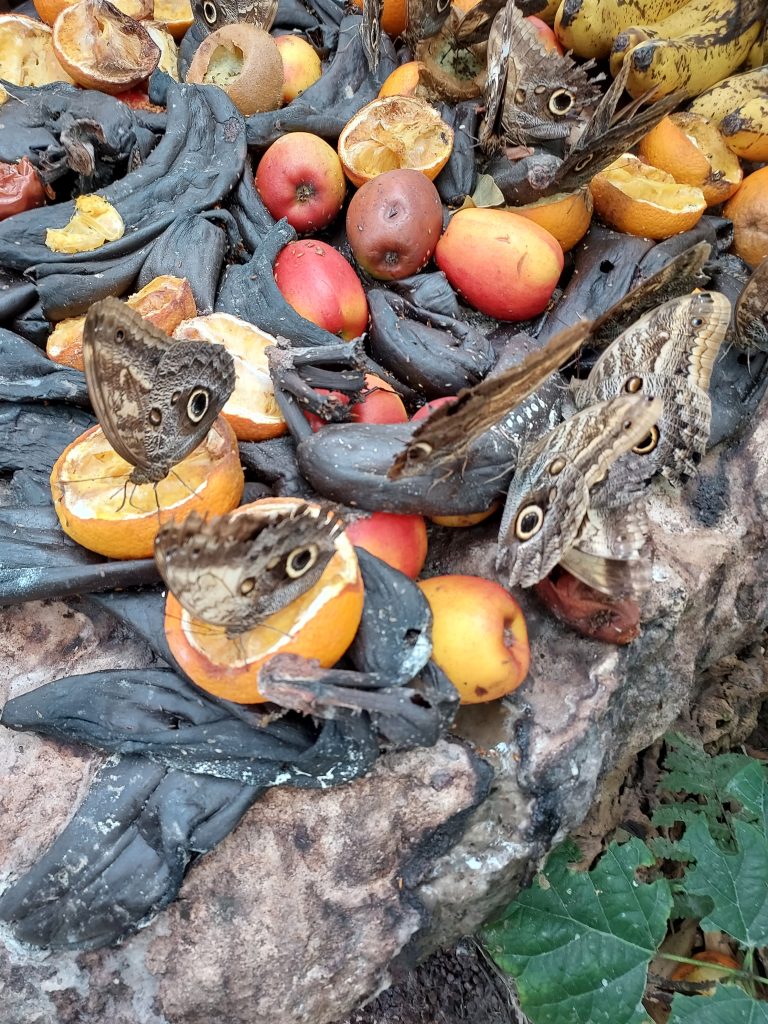
As we entered the Butterfly House, one of the first butterflies we encountered was the Giant Owl Butterfly. Feasting here on fresh citrus, its distinctive coloration prompted my thinking of them as birds rather than the insects they are.
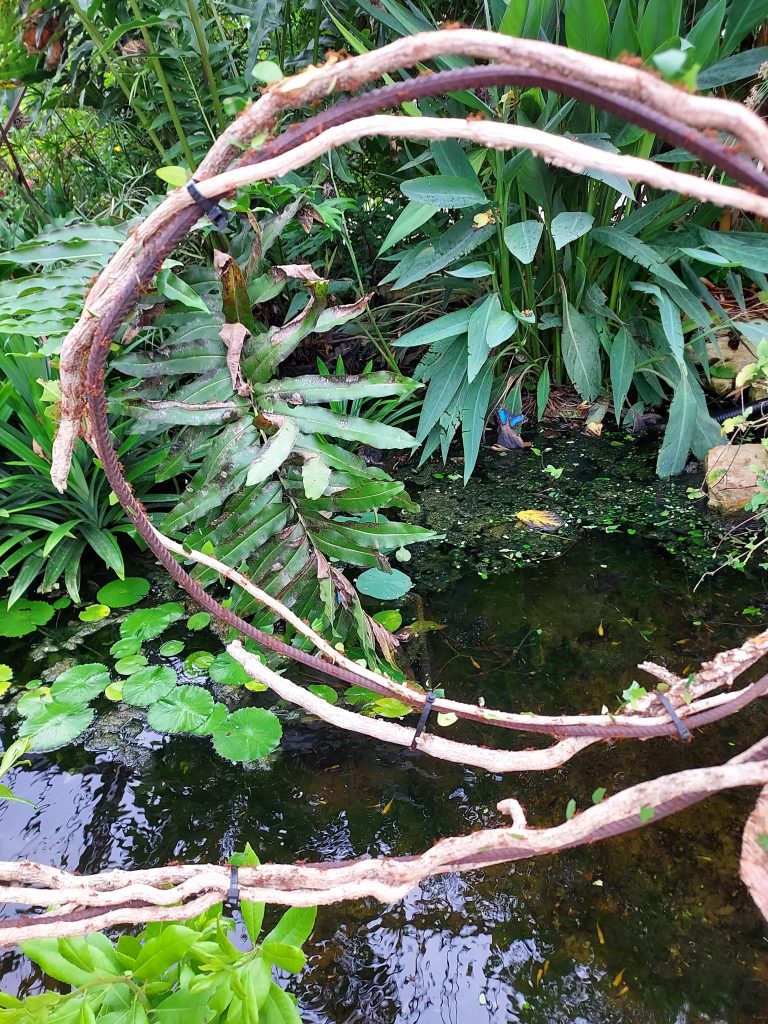
Not merely leaves and twisted vines, this circular vine provides a path for leaf cutting ants. Look very carefully to see the tiny triangular, upright leaf pieces all along the trail.
These industrious creatures carry bits of leaves underground where fungus grows on them. The ants then eat the fungus.
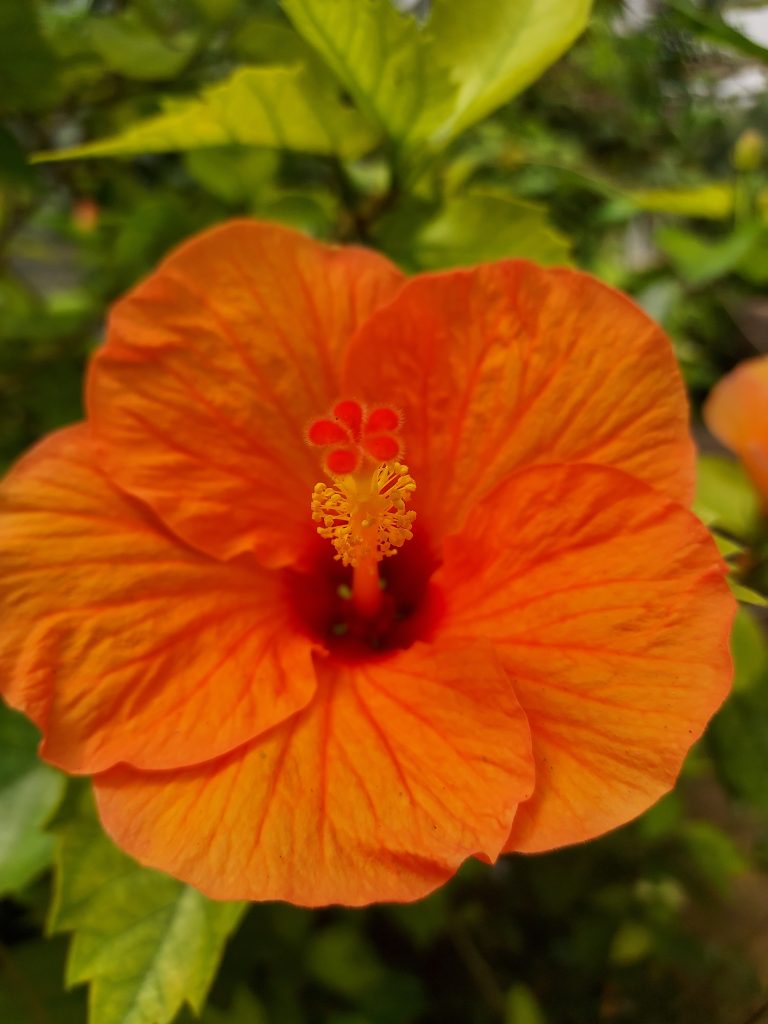
Of course, beautiful, tropical flowers also live in the Butterfly House. This is a Hibiscus x rosa-sinensis has a number of names: Chinese hibiscus, China rose, Hawaiian hibiscus, and rose mallow.
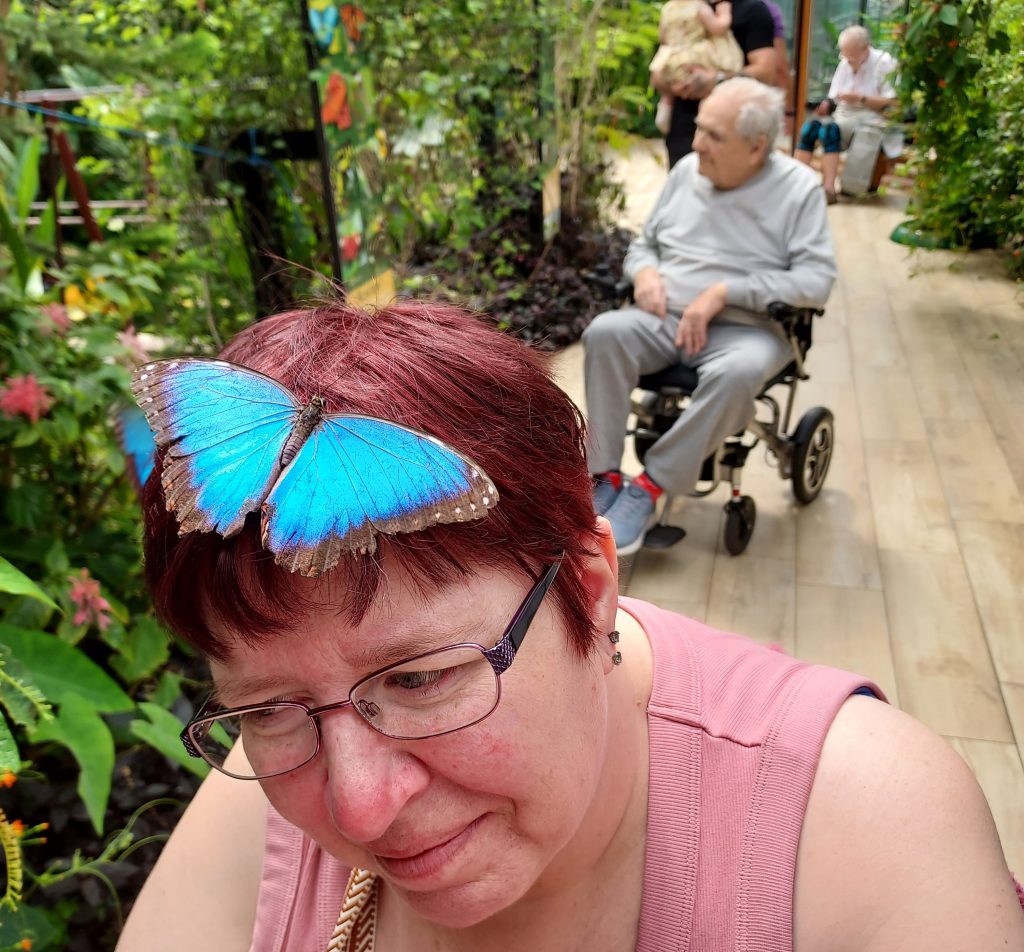
As we neared the exit, Kat was treated by a visit from a blue morpho butterfly. Its wingspan is about 4.7 inches; and apparently, it is very friendly.
Rick, behind her, studies a bit of nature, as he has done throughout his 86 years. He thanks his grandmother for her tutelage in nature while he was a small child.
In his early 20’s, he bred moths and butterflies, buying starters from South America and selling them to English universities.
One of them, Peter Webb, included an insect emporium in the bird refuge he built; and he stocked it with Rick’s supply.
Much is learned on an excursion with the Dodges, and I’m glad to share it with you.

Sounds like another lovely outing 😊
Always good to get your brief but supportive messages. How about you? going on any outings?
Loved these photos! The Blue Morpho Butterfly was my favorite, but the Hibiscus is stunning! When in Costa Rica for Greg’s wedding, we watched leaf cutter ants industriously carrying their “treasure”. It probably was at least a block long! Amazing creativity of our Creator God!
By His amazing creation, we see that He, the Creator, is varied, industrious, beautiful, and incredible. Thanks for commenting.